The final curtain has fallen on one of pop music’s most iconic trios. Nedra Talley Ross, the last surviving original member of The Ronettes, has died at the age of 80. Her passing marks not just the end of a life steeped in rhythm, rebellion, and revolution in sound, but the quiet closing of a chapter in American music history.
The Ronettes weren’t just another girl group—they were a seismic force in 1960s rock and roll. With their towering beehives, dramatic eyeliner, and harmonies that cut through reverb like lightning, they redefined what female vocalists could be: bold, sensual, and unapologetically present. Nedra, alongside her cousin Veronica "Ronnie" Bennett (later Ronnie Spector) and sister Estelle Bennett, formed the trio that would become synonymous with Phil Spector’s “Wall of Sound” and timeless hits like “Be My Baby” and “Walking in the Rain.”
Now, with Nedra’s passing, the group’s living legacy has fully transitioned into history.
The Ronettes: Architects of a Sound, Icons of an Era
Before there were Motown girl groups or punk-infused pop sirens, there were The Ronettes—raw, glamorous, and electrifying. Emerging from Harlem in the early 1960s, they began as a local act singing at weddings and talent shows. But their sound—rooted in gospel, R&B, and street-corner doo-wop—carried a depth that caught the ear of Phil Spector.
Spector didn’t just produce The Ronettes; he weaponized their sound. His Wall of Sound production technique layered instruments, percussion, and backing vocals into a dense, cinematic texture. And at the center of it all stood the Ronettes’ harmonies—tight, rich, and emotionally charged. Nedra’s voice, often in the middle register, provided the harmonic glue that anchored Ronnie’s soaring lead and Estelle’s lower counterpoints.
Their 1963 single “Be My Baby” remains one of the most influential recordings in pop history. The opening drum beat—famously described by Brian Wilson of The Beach Boys as “the greatest record ever made”—set a new standard for emotional intensity in pop music. The song wasn’t just a hit; it was a blueprint.
Nedra, though rarely the lead, was indispensable. Her timing, pitch precision, and stage presence helped define the group’s identity. Interviews from the era reveal her as the most spiritually grounded of the trio—a contrast to Ronnie’s fiery passion and Estelle’s quiet intensity.
Beyond the Music: Faith, Resilience, and Reinvention
Unlike many of her peers, Nedra Talley Ross stepped away from the music industry at its peak. By the late 1960s, amid the group’s decline and the toxic control exerted by Phil Spector over Ronnie, Nedra began to reevaluate her path. She married composer and producer Scott Ross in 1967 and gradually shifted her focus toward family and faith.
In the 1970s, she became a committed Christian, a decision that shaped the rest of her life. She distanced herself from the secular music world, occasionally performing at religious events but never seeking a mainstream comeback. This choice was often misunderstood—some saw it as a retreat, but for Nedra, it was a reclamation.
“For me, singing was never just about fame,” she said in a rare 2010 interview. “It was about expression, about connection. When my priorities changed, my expression changed with them.”
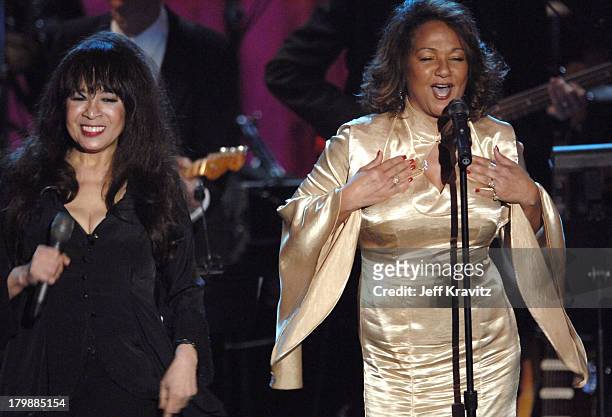
Still, her legacy in music never faded. The Ronettes were inducted into the Rock and Roll Hall of Fame in 2007—an overdue recognition that came after years of advocacy. At the ceremony, Nedra spoke with quiet dignity, honoring her cousins and acknowledging the struggles they faced under Spector’s shadow.
The Shadow of Phil Spector: Triumph and Trauma
No story of The Ronettes is complete without confronting the dual legacy of Phil Spector. He was their creator and their captor. His genius in the studio gave them immortality; his abuse and control stripped them of autonomy.
Ronnie Spector’s memoir, Be My Baby: How I Survived Mascara, Miniskirts, and Madness, laid bare the psychological imprisonment she endured during her marriage to Spector. While Nedra and Estelle were not subject to the same level of personal abuse, they were still caught in the machinery of his manipulation—contract disputes, withheld royalties, and creative suppression.
Nedra spoke carefully about this period, protecting the dignity of her late cousin while not minimizing the damage. “We were young, ambitious, and trusting,” she said in a 2016 radio appearance. “We didn’t know how the business worked. We didn’t know how power could be used to silence you.”
The Ronettes’ legal battles with Spector over royalties lasted decades. It wasn’t until the 2000s that they began to see fair compensation for their work—a testament to persistence in the face of systemic exploitation.
A Legacy That Outlived the Charts
The Ronettes never had the longevity of some of their contemporaries. They released only one full studio album, Presenting the Fabulous Ronettes Featuring Veronica Bennett (1964), and disbanded by the end of the decade. But their influence far outstripped their output.
Artists from Bruce Springsteen to Amy Winehouse have cited The Ronettes as a key inspiration. Springsteen once said he wrote “Baby, We Were Meant for Each Other” as a love letter to “Be My Baby.” Winehouse’s blend of vintage glamour and emotional vulnerability echoed the Ronettes’ style down to the winged eyeliner.
Nedra Talley Ross remained a quiet guardian of that legacy. She participated in archival projects, authorized reissues, and supported documentaries that told the group’s full story—not just the hits, but the struggles behind them.
In 2022, when Ronnie Spector passed away at 78, Nedra became the last living original Ronette. That mantle carried weight. She didn’t seek the spotlight, but she never shied from honoring her sisters in song.
The Cultural Impact of the Girl Group Era
The Ronettes were part of a broader movement—the girl groups of the early 1960s—that gave young women a voice in popular music. Groups like The Shirelles, The Crystals, and The Supremes created space for female narratives in a male-dominated industry.
But The Ronettes stood apart. They weren’t sweet or demure. They were sultry, defiant, and street-smart. Songs like “(The Best Part of) Breakin’ Up” and “Do I Love You?” carried a magnetic intensity that blurred the line between love and obsession.
This wasn’t accidental. Spector crafted their image deliberately—but Nedra and the others brought authenticity to it. They weren’t playing characters; they were amplifying their own experiences as young Black and Puerto Rican women navigating fame, race, and identity in 1960s America.
Their fashion—tight skirts, heavy eyeliner, towering hair—became a cultural signature. It influenced punk, new wave, and even modern pop aesthetics. When Taylor Swift performed in a beehive wig during her Reputation tour, it was a silent homage to the Ronettes’ enduring style.
Why Nedra Talley Ross Mattered
It’s easy to overlook the supporting voice in a trio, especially when the lead singer becomes a legend. But harmony is not hierarchy—it’s balance. Nedra Talley Ross was the balance.
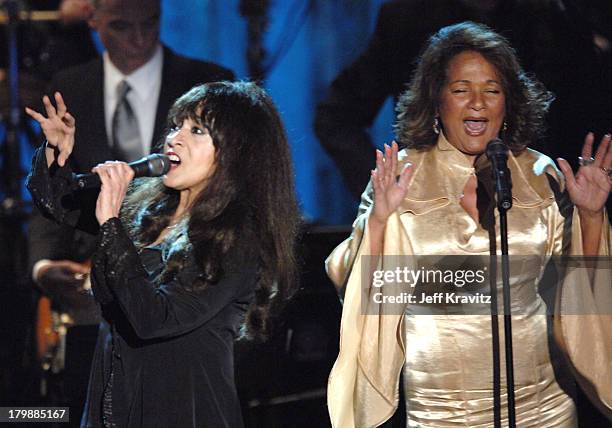
She was the steady presence during chaotic tours, the moral compass during industry exploitation, and the keeper of the flame after the others were gone. Her decision to step away from fame wasn’t a rejection of music—it was a redefinition of purpose.
And yet, her voice remains embedded in the DNA of pop. Every time a artist uses reverb-heavy production, every time a performer channels vintage glamour with modern edge, they’re echoing the blueprint the Ronettes laid down.
The End of an Era—And the Birth of a Legacy With Nedra Talley Ross’s passing, there are no original Ronettes left. But their music hasn’t died. It lives in every drum beat that mimics Hal Blaine’s iconic intro, in every belted high note drenched in longing, in every beehive still daring to rise.
Her death is not just a loss—it’s a moment of reflection. It asks us to remember not only the songs, but the women behind them: talented, resilient, and too often undercredited. It reminds us that legacy isn’t just about hits on a chart, but about influence that outlasts a lifetime.
For anyone who’s ever turned on “Be My Baby” and felt their heart sync with that first drum hit, Nedra Talley Ross was part of that feeling. She was in the harmony, in the swing, in the soul.
Now, her voice joins the chorus of music legends who shaped the sound of a century.
Honoring the Ronettes: How to Keep Their Music Alive
Preserving the legacy of The Ronettes isn’t just about nostalgia—it’s about education and access. Here’s how fans and new listeners can keep their music relevant:
- Stream their essential tracks: “Be My Baby,” “Walking in the Rain,” “Baby, I Love You,” and “(The Best Part of) Breakin’ Up” are foundational.
- Watch archival performances: Clips from Hullabaloo and The Ed Sullivan Show capture their stage presence.
- Read Ronnie Spector’s memoir: A raw, honest account of their journey.
- Support reissues and remasters: Legitimate releases help fund artist estates and preservation.
- Introduce younger listeners: Play their music in playlists, at events, or in classrooms studying 1960s culture.
Their story is one of triumph over adversity, of artistry under pressure, and of sisterhood that endured beyond the spotlight.
FAQ
Was Nedra Talley Ross related to Ronnie Spector? Yes, Nedra Talley Ross was Veronica “Ronnie” Spector’s first cousin. Estelle Bennett, the third Ronette, was Ronnie’s older sister.
Did Nedra Talley Ross continue singing after The Ronettes? She largely stepped away from the mainstream music industry after the 1960s, focusing on family and faith. She occasionally performed at religious events but did not pursue a commercial music career.
Why weren’t The Ronettes inducted into the Rock Hall sooner? Despite their influence, The Ronettes faced delays in recognition due to industry politics and Phil Spector’s controversial legacy. They were finally inducted in 2007.
What was Nedra’s role in The Ronettes? Nedra was a backing vocalist and harmony singer, providing the middle voice in the trio’s signature sound. She also contributed to choreography and stage presence.
Did The Ronettes write their own songs? Most of their hits were written by professional songwriters like Jeff Barry, Ellie Greenwich, and Phil Spector. The group did not write their major recordings.
How did Phil Spector affect The Ronettes’ career? He produced their biggest hits using his Wall of Sound technique but also exerted controlling and abusive behavior, particularly over Ronnie Spector, which derailed the group’s momentum.
Where can I hear The Ronettes’ music today? Their music is available on major streaming platforms like Spotify, Apple Music, and YouTube, as well as in compilation albums like The Very Best of The Ronettes.
FAQ
What should you look for in Nedra Talley Ross, Last Surviving Ronettes Singer, Dies at 80? Focus on relevance, practical value, and how well the solution matches real user intent.
Is Nedra Talley Ross, Last Surviving Ronettes Singer, Dies at 80 suitable for beginners? That depends on the workflow, but a clear step-by-step approach usually makes it easier to start.
How do you compare options around Nedra Talley Ross, Last Surviving Ronettes Singer, Dies at 80? Compare features, trust signals, limitations, pricing, and ease of implementation.
What mistakes should you avoid? Avoid generic choices, weak validation, and decisions based only on marketing claims.
What is the next best step? Shortlist the most relevant options, validate them quickly, and refine from real-world results.